Best Veggie Dog Foods for a Plant-Based Diet
Exploring vegetarian and vegan options can support dogs with dietary preferences or sensitivities while still delivering essential nutrients. This article highlights five dog foods that emphasize plant-based proteins, vegetables, and grain-free bases. Each product offers a different approach—from dehydrated base mixes you customize at home to pre-mixed vegan formulas—so you can compare textures, protein sources, and preparation methods to fit your dog’s needs. The selections focus on human-grade quality, digestibility, and balanced nutrition aligned with common canine dietary guidelines.
| Product | Brand | Type |
|---|---|---|
| Dr. Harvey’s Veg-to-Bowl Pre-Mix Dog Food, Grain Free | Dr. Harvey’s | Grain-free base mix (dehydrated vegetables, eggshell calcium) |
| Fromm Four-Star Nutritionals Chicken A La Veg | Fromm | Dry dog food, chicken, vegetables |
| Fromm Four-Star Nutritionals Salmon A La Veg | Fromm | Dry dog food, salmon, vegetables |
| Natural Balance Limited Ingredient Adult Dry Veg Food | Natural Balance | Dry dog food, vegan plant-based protein |
| Natural Balance Limited Ingredient Wet Veg Food | Natural Balance | Wet canned dog food, vegan protein |
Dr. Harvey’s Veg-to-Bowl Pre-Mix Dog Food

Dr. Harvey’s Veg-to-Bowl Pre-Mix is a grain-free base mix designed to compose balanced, homemade meals without relying on kibble. The base mix consists of nine nutrient-dense dehydrated vegetables, herbs, and crushed eggshells for natural calcium. It is advertised as 100% human-grade and free of dyes, fillers, preservatives, wheat, corn, or soy. Preparation is straightforward: rehydrate with hot water for 8 minutes, then add a protein and a healthy oil of choice. This option aims to support digestion, energy, skin health, and firmer stools. The product focuses on whole-food nutrition and may be paired with various proteins to suit individual dogs.
Features at a glance include a ready-to-use base that reduces processed ingredients, a grain-free formulation, and a simple two-step preparation. Its emphasis on human-grade ingredients can be appealing for pet owners seeking transparent sourcing. Dogs with sensitivities to traditional kibble or those needing a customizable diet may benefit from Veg-to-Bowl as a versatile base. However, owners should ensure sufficient protein and fats are integrated to meet daily energy needs.
Fromm Four-Star Chicken A La Veg
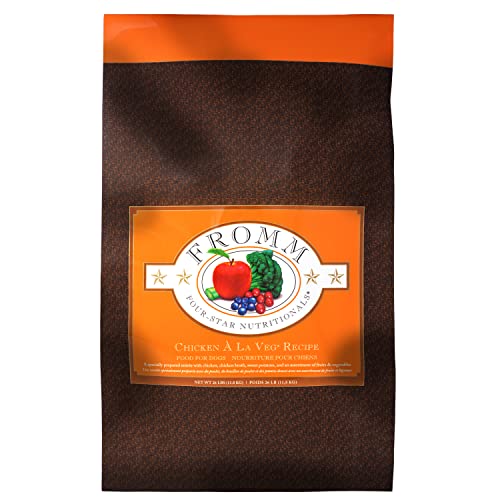
This dry dog food blends chicken with a mix of vegetables and fruits to create a complete and balanced diet for all life stages, according to its nutritional profile. Fromm is described as a family-owned business with a long-standing tradition of quality since 1904. The formula emphasizes high-quality chicken as a primary protein source, supporting muscle maintenance and metabolic functions. The product line aims to be digestible and palatable, making it a practical option for dogs that prefer traditional kibble but still want vegetable inclusions in their meals. The 26-pound bag size is suitable for households with larger dogs or multiple pets.
Key considerations include protein quality and digestibility, the overall balance of fats and calories, and the inclusion of a variety of vegetables and fruits to supply vitamins and minerals. While the product is not fully plant-based, it offers a blend where vegetables complement the protein. Owners seeking a primarily vegetarian transition may need to pair this with a plant-based protein source or choose a different vegan formula if a strict plant-based diet is desired.
Fromm Four-Star Salmon A La Veg

This Fromm salmon-based dry dog food features salmon, sweet potatoes, and a medley of fruits and vegetables. The product is positioned as a high-quality option with salmon as the primary animal protein, aligning with canine palatability and digestibility. The Fromm brand emphasizes a long family heritage and a commitment to nutrition across life stages, with a focus on protein quality to support muscle maintenance and metabolic needs. The 26-pound bag size is suited for households with multiple dogs or larger breeds. The inclusion of salmon offers omega-3 fatty acids that can support coat and skin health alongside the vegetable components.
Pet owners should assess the dog’s protein tolerances, as well as any dietary restrictions that might require adjusting the plant component balance. For dogs seeking a more plant-forward approach while still enjoying a meat-inclusive recipe, this product sits at the intersection of quality protein and vegetables rather than a strictly vegan formula.
Natural Balance Limited Ingredient Vegetarian Dry Food

This dry dog food showcases a vegetarian, plant-based protein formula designed to provide essential nutrients without animal products. It emphasizes barley and peas as dietary staples, delivering nutrition while maintaining a meat-free composition. The 24-pound bag is suitable for households with multiple dogs or larger breeds. The product claims to be complete and balanced with a focus on supporting coat, skin, and digestive health. It is described as free from added soy, gluten, artificial colors, or flavors, which can appeal to dogs with sensitivities to certain ingredients.
Considerations for this option include evaluating protein completeness and amino acid profiles from plant sources, as well as potential calmer palatability for dogs transitioning from meat-based diets. While plant-based proteins can meet vegan dietary goals, some dogs may require careful monitoring to ensure full nutritional adequacy, particularly for essential amino acids and calcium intake.
Natural Balance Limited Ingredient Wet Veg Food

This vegetarian wet dog food offers plant-based protein in a savory canned format. The product emphasizes simple recipes with premium plant ingredients to support a healthy coat, skin, and digestive system. The 13-ounce cans come in a pack, providing convenient portions for daily feeding or varying meal plans. The formulation focuses on no animal-derived ingredients and avoids soy, gluten, and artificial colors or flavors, appealing to dogs with sensitivities or owners seeking a meat-free option for wet meals. Wet formulas can aid hydration and palate variety, though they may be pricier per serving compared to dry options.
When selecting canned plant-based dog food, consider moisture content, palatability, and the balance of fiber and protein to maintain energy and digestion. Canned vegetarian recipes can complement dry plant-based bases or serve as a standalone option for dogs transitioning away from meat-based diets.
Buying Guide: Key Purchase Considerations For Veggie Dog Foods
Choosing a plant-based diet for a dog involves balancing protein quality, energy needs, and nutrient completeness. Here are essential considerations to help compare options:
- Protein Source And Quality: Look for dog foods with clear plant-based protein sources and complete amino acid profiles. Check for added essential nutrients like omega-3 fatty acids, calcium, and vitamin B complexes.
- Life Stage And Calorie Density: Ensure the recipe aligns with your dog’s life stage (puppy, adult, or senior) and activity level. Dry formulas often have higher calorie density, while wet foods increase moisture intake.
- Digestibility And Coat Health: Plant-based ingredients such as peas, lentils, and certain grains can affect digestibility. Omega-3 fatty acids from flaxseed or algae support coat and skin health.
- Allergies And Sensitivities: If your dog has sensitivities to soy, gluten, or certain grains, verify ingredient lists and consider limited-ingredient formulas.
- Preparation And Convenience: Dehydrated base mixes require rehydration and assembly with a protein and oil, offering customization. Dry and wet meals vary in preparation time and storage needs.
- Brand Transparency And Sourcing: Prefer brands with clear ingredient sourcing and human-grade or high-quality ingredients. The brand’s history and manufacturing practices can influence product reliability.
- Feeding Guidelines: Follow feeding guidelines based on weight and age, and monitor weight, energy, stool quality, and overall wellness as you transition diets.
Multi-perspective approach helps address taste preferences, digestive comfort, and nutritional adequacy. For some dogs, a mixed approach—combining dry plant-based kibble with a plant-based wet option or dehydrated base—can offer variety while maintaining nutritional goals. Always consult a veterinarian or a veterinary nutritionist when making substantial diet changes, particularly for puppies, seniors, or dogs with medical conditions.