Best Turtle Water Filters for Clear Healthy Aquariums
Choosing the right turtle water filter involves balancing tank size, filtration capability, and ease of maintenance. This guide reviews five reliable options that cover small terrariums to large turtle enclosures, with different filtration stages and adjustable flow. Each model is evaluated for its media, suitability for freshwater and brackish setups, and user-friendly design. Whether you keep a lone red-eared slider or a mixed terrarium with frogs and fish, these filters help maintain clean water and a healthier habitat.
| Product | Brand | Tank Size Range (Gal) | Flow (GPH) | Highlights |
|---|---|---|---|---|
| Tararium 290GPH Turtle Filter (40-85 Gal) | Tararium | 40-85 | 290 | Bottom suction, multi-function, ceramic bio-balls |
| Tararium 290GPH Turtle Filter (20-75 Gal) | Tararium | 20-75 | 290 | Three-stage filtration, adjustable flow |
| Zilla Reptile Internal Water Filter (Up To 40 Gal) | Zilla | Up to 40 | — | Includes carbon cartridge, protective grate |
| Moonorange 3.5W Turtle Filter (1-15 Gal) | Moonorange | 1-15 | — | Low-water level design, two installation modes |
| Tetra ReptoFilter For Terrariums | Tetra | Terrarium use | — | 3-stage filtration, built-in waterfall |
Tararium 290GPH Turtle Filter (40-85 Gal)

This turtle tank filter operates as a multifunction unit, delivering circulation, filtration, impurity removal, and additional oxygenation in one compact system. With a robust 290 GPH flow, it supports freshwater, saltwater, and muddy-water aquariums from 40 to 85 gallons. A bottom suction design helps pull waste and uneaten food from the tank bottom, reducing the need for frequent water changes and helping maintain crystal-clear water. The filtration media includes a mesh sponge to trap particulate matter and food debris, coupled with ceramic bio-balls that provide ample surface area for beneficial bacteria to break down ammonia and nitrites. This combination supports a healthy aquatic environment for turtles, shrimps, amphibians, and mixed-inhabitants.
- Bottom-suction system for bottom debris removal
- Double-sided mesh sponge for debris capture
- Ceramic bio-balls promote beneficial bacteria growth
- Suitable for multiple water types and large turtle setups
Tararium 290GPH Turtle Filter (20-75 Gal)

This internally installed filter is designed for 20-75 gallon tanks and features a three-stage filtration system that includes two dense mesh sponge stages for debris and waste, plus ceramic bio-balls that support beneficial bacteria and help reduce odors and discoloration. The flow is adjustable, enabling you to tailor the filtration strength to the tank’s inhabitants and plants. The design emphasizes steady water movement while preventing excessive current that could stress turtles or other amphibians. It supports a cleaner environment with reduced maintenance and water-change frequency.
- Stage 1 & 2: Dense mesh sponge for debris and waste
- Stage 3: Ceramic bio-balls for bacterial colonies
- Adjustable and steady water flow
Zilla Reptile Internal Water Filter (Up To 40 Gal)
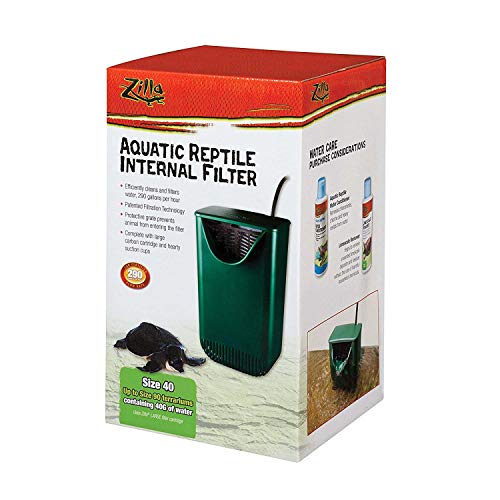
The Zilla internal filter is designed for terrarium water needs up to 40 gallons, featuring a medium carbon cartridge to absorb odors and impurities. A protective grate helps prevent animals from entering the filter, adding a level of safety in enclosures that house turtles and other small aquatic reptiles. The unit emphasizes powerful filtration within a compact footprint, delivering reliable cleaning without taking up valuable tank space. While the exact flow rate isn’t listed, its compact design makes it a practical choice for medium-sized terrariums that require consistent water clarity.
- Includes medium carbon cartridge
- Protective grate prevents animal entry
- Compact, powerful internal filtration
Moonorange 3.5W Turtle Filter (1-15 Gal)
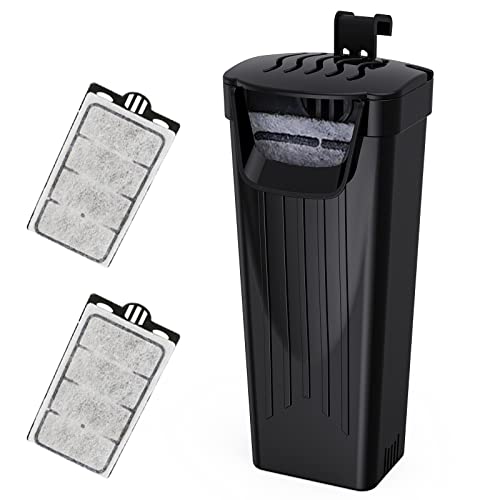
This compact low-water filter is designed for small tanks, delivering reliable flow with a 280 L/H rating and a minimal footprint suited for 1-15 gallon setups. It offers two installation modes: an adjustable hanging hook or suction cups to fit different tank configurations. A waterfall-style circulation helps improve oxygenation and overall water movement without creating strong currents that could stress small turtles or amphibians. The unit includes two cartridges and is marketed for versatile use in low-water environments where space is limited.
- Low-water level design for small tanks
- Two installation modes: hook or suction cups
- Waterfall circulation to boost dissolved oxygen
Tetra ReptoFilter For Terrariums

The Tetra ReptoFilter combines filtration and a built-in waterfall to keep water clear in turtle, frog, and newt terrariums. Its three-stage filtration helps remove odors and debris while maintaining a visually appealing, realistic rock-like appearance that blends with natural tank decor. The dual-function lid provides a safe barrier for reptiles while also serving as a basking platform. This model emphasizes aesthetic integration in terrariums alongside reliable filtration for active amphibians and small reptiles.
- Three-stage filtration with integrated waterfall
- Realistic stone appearance that blends with decor
- Dual-function lid doubles as a basking platform
Buying Guide
Key considerations when selecting a turtle water filter include tank size, filtration stages, media compatibility, installation method, noise, and maintenance. Here are the main factors to compare across models and find the best fit for your enclosure.
Tank Size And Filtration Fit
Choose a filter rated for your tank’s volume or slightly higher to ensure effective turnover. Turtle habitats often benefit from systems delivering 5-10x tank volume in gallons per hour (GPH) to maintain clarity and residual waste management. Larger enclosures (40-85 gallons) typically need higher GPH and robust media, while smaller terrariums (1-15 gallons) prioritize compact size and gentle flow to avoid stressing inhabitants.
Filtration Stages And Media
Most turtle-focused filters combine mechanical, chemical, and biological filtration. Look for:
- Mechanical media (sponges or pads) to trap debris
- Chemical media (activated carbon) to remove odors and dissolved compounds
- Biological media (ceramic bio-balls, bio-rings) to foster beneficial bacteria
Media compatibility matters for maintenance cost and effectiveness. Some models include carbon cartridges that require replacement every week or two, while others use sponge baths that last longer with periodic cleaning.
Flow Rate, Noise, And Tank Layout
Adjustable flow is valuable for minimizing stress on turtles and maintaining appropriate water movement around filter intake and output. Consider filter placement (in-tank vs. external) and noise levels, especially in living spaces. In-tank filters with suction-cup mounting may be preferred for shallow or irregular tanks, while internal or hang-on designs offer simpler maintenance in deeper enclosures.
Maintenance And Replacement Costs
Maintenance frequency varies by media type. Sponge-based systems often require rinsing every 1-2 weeks and occasional media replacement. Carbon cartridges may need weekly changes, increasing ongoing costs. Assess the total cost of ownership, including media availability and replacement intervals, to avoid hidden expenses over time.
Compatibility With Amphibians And Reptiles
Some habitats host a mix of turtles, frogs, and small fish. Choose a filter with a gentle, adjustable flow to avoid stressing sensitive species, and ensure there are protective grates to prevent animal entry into the intake. In terrarium setups, consider filters that integrate with existing decor and provide safe basking zones.
Comparative Snapshot
Across the five featured filters, you’ll find a spectrum from compact, low-water models designed for 1-15 gallon tanks to higher-capacity units suitable for 40-85 gallon enclosures. For larger tanks with heavy waste loads, models offering 290 GPH and robust ceramic media tend to perform best. For small terrariums, compact internal or waterfall-style filters with adjustable flow provide adequate aeration and filtration without overwhelming inhabitants. Always match the product’s tank range and media to your specific enclosure and residents.