Best Shock Fence for Cats: Safe, Humane Pet Boundaries You Can Trust
Protect indoor and outdoor spaces with reliable, cat-friendly boundary solutions. This guide highlights top shock and barrier fencing options designed for cats, emphasizing humane training, adjustable settings, and practical deployment. Explore barriers and remote collars that help keep curious felines safe without overstimulation.
| Product | Brand | Type | Notes |
|---|---|---|---|
| FLYSPEAR Wireless Cat Barrier | FLYSPEAR | Indoor wireless barrier | 6 range levels; easy repositioning |
| Jeyihka Cat Shock Collar With Remote | Jeyihka | Remote collar | Up to 2000 ft; 3 training modes |
| Dali Energy Cat Bark Collar (Rose Pink) | Dali Energy Cat | Remote collar | 3 training modes; 3300 ft range |
| Dali Energy Cat Bark Collar (Army Green) | Dali Energy Cat | Remote collar | Same features; color variant |
| PetSafe In-Ground Fence | PetSafe | In-ground fence system | Up to 1/3 acre; expandable |
FLYSPEAR Wireless Cat Barrier

The FLYSPEAR Indoor Cat Barrier offers a compact, rechargeable solution to keep cats out of restricted areas. It features a hook-and-loop collar suitable for felines, with a wireless barrier that can be placed in kitchens, living rooms, or stairwells. It includes 0–6 adjustable static levels for a gentle correction sequence, paired with audible beeps to deter entry before any static stimulus. With its portable design, you can temporarily section off counters, garbage areas, or other hotspots as needed. Ideal for apartments or smaller homes where a fixed outdoor fence is impractical.
Features support effortless setup and mobility: an adjustable range and collar that fits cats from small to medium sizes, along with a lightweight receiver. The system emphasizes safety by using escalating cues rather than aggressive stimulation. This makes it a practical choice for households wanting a non-permanent boundary that can be moved between rooms as needed.
Jeyihka Cat Shock Collar With Remote

This cat-focused remote training system is designed for small to mid-size cats, featuring a lightweight collar and a remote with a 2000-foot range. It offers three training modes—beep, vibration, and static stimulation—allowing humane, adjustable training for behaviors such as meowing, jumping, or leaping toward restricted zones. The collar and transmitter are compact, and the device includes a loop-friendly design with wear comfort in mind. It suits households that prefer a proactive training approach to behavior management without constant supervision.
Dali Energy Cat Bark Collar (Rose Pink)
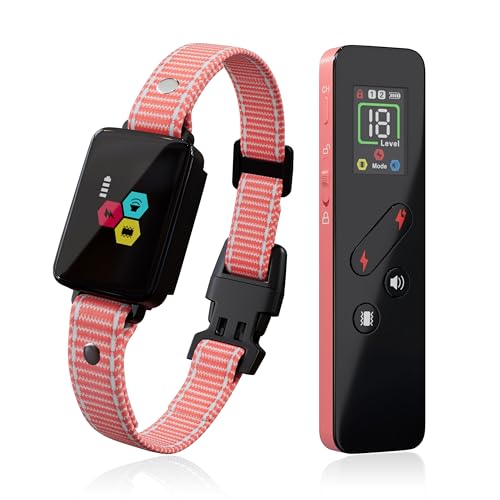
Designed specifically for cats, this bark collar emphasizes humane training with 3 modes: beep, vibration, and static stimulation. The collar is ultralight and small enough for most cats, with adjustable levels to customize correction intensity. Dual-channel remote capability lets you manage two cats separately, reducing the need to switch settings often. The 3300-foot remote range supports outdoor use and remote monitoring in larger yards, parks, or open spaces where cats roam. The IP67-level waterproof rating adds resilience against weather exposure.
Dali Energy Cat Bark Collar (Army Green)

This color variant shares the same feature set as its rose-pink sibling, offering three training modalities and a remote with multi-channel capability. It is built for kittens and adult cats alike, providing a compact form factor and straightforward controls. The collar’s materials are chosen to be gentle on fur, and the remote supports long-range training across multiple environments, including indoor rooms and outdoor yards. It is suitable for households seeking a cohesive color option without sacrificing function.
PetSafe Rechargeable In-Ground Fence

PetSafe offers a well-established in-ground boundary system suitable for dogs and cats above 5 pounds, providing tone and static correction options. The kit supports customizable area settings with expandable coverage up to 25 acres when used with extra wire and flags. Its rechargeable, waterproof receiver collar ensures continued use in varied weather. This option is best for households seeking a more permanent perimeter solution that can be scaled up as pets grow or as property boundaries expand. It also integrates with a broad ecosystem of In-Ground Fence accessories.
Buying Guide: Key Purchase Considerations
- Boundary type: Choose between indoor wireless barriers for room-to-room control and in-ground or GPS-based systems for larger outdoor spaces. Wireless barriers are typically easier to relocate, while in-ground setups offer permanent perimeters.
- Pet size and temperament: Ensure the collar or barrier is suitable for your cat’s neck size and sensitivity. Start with the lowest effective stimulus and observe your cat’s response.
- Correction modes and safety: Look for multiple correction levels and modes (beep, vibration, static) to tailor training. Prioritize humane, gradual correction and automatic shutoffs after repeated triggers to prevent overstimulation.
- Weather and durability: For outdoor use, verify IP ratings (water resistance) and battery life. Waterproof or weather-resistant collars extend usability in rain or humidity.
- Coverage area: Consider the size of your home or yard. Indoor barriers are handy for counters and furniture; outdoor systems should match the yard size, with scalable options when expanding.
- Maintenance and ease of use: Favor systems with simple setup, straightforward controls, and reliable customer support. Rechargeable batteries reduce ongoing costs and hassle.
- Compatibility: Check whether collars are compatible with multiple pets if you need to manage more than one cat. Some kits offer dual-channel remotes for independent control.
- Safety-first design: Ensure devices have clear training guidelines, audible prompts before stimulation, and a pause after correction to prevent continuous discomfort.
Across these products, buyers should weigh whether a temporary, movable barrier suffices for their layout or if a more permanent, scalable fence is necessary. Indoor barriers excel for apartment living or stair management, while outdoor systems are better for homes with yards, porches, or fenced areas. For multi-pet homes, dual-channel remotes or separate collars can simplify training and reduce cross-interference. Always monitor your cat’s comfort level and progress, adjusting settings to promote safe, voluntary boundaries.