Best Ear Mite Treatments for Cats: Quick Relief and Safe Care
Ear mites are a common issue for cats, causing itching, ear discharge, and discomfort. Over-the-counter ear mite treatments can provide fast relief, but the right choice depends on your cat’s age, health, and the severity of the condition. This guide highlights five cat-focused options, with an eye toward ease of use, soothing ingredients, and effective mite control. All selections are suitable for home use but consult a veterinarian if symptoms persist or your cat has a history of ear problems.
Before diving in, consider the product’s active ingredients, application method, and treatment duration. Some formulas focus on immediate mite kill and itch relief, while others address recurrent issues or accompanying skin irritation. The following quick-reference table summarizes the five selected products to help you compare at a glance.
| Product | Brand | Key Benefit | Notes |
|---|---|---|---|
| PetArmor Ear Mite Treatment for Cats | PetArmor | Kills ear mites and ticks; aloe provides itch relief | Topical drops; for cats |
| Four Paws Aloe Ear Mite Treatment for Cats | Four Paws | Kills on contact | 0.75 fl oz; cat-focused |
| Zymox Advanced Formula Otic Plus | Zymox | Enzymatic relief for recurrent ear issues | 1% hydrocortisone; for cats and dogs |
| BestLife4Pets Mange Treatment for Cats | BestLife4Pets | Cat mange and ear mite relief; odorless pills | Oral option; cat-focused |
| Happy Jack Mitex Ear Mite Treatment | Happy Jack | Kills ear mites on contact; safe for 12 weeks+ | Drops; for cats and dogs |
PetArmor Ear Mite Treatment for Cats
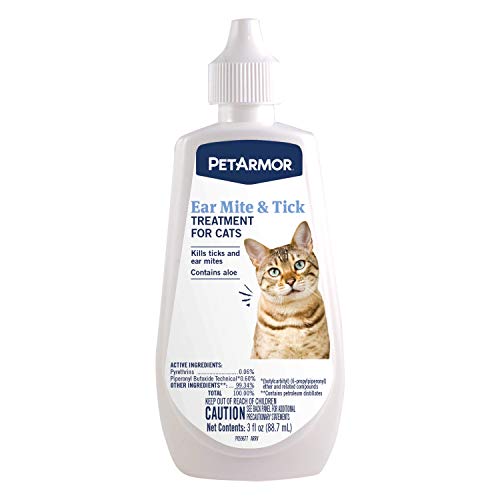
PetArmor Ear Mite Treatment for Cats combines a mite- and tick-killing formulation with soothing aloe to reduce itchiness and discomfort in feline ears. The product is designed to target ear mites at their source, helping to break the itch-scratch cycle that can lead to further irritation. Aloe adds a calming element to the treatment, which can be especially helpful for cats with sensitive skin. The manufacturer recommends applying five drops into each ear twice daily, making it straightforward to implement as part of a daily routine.
In practice, this treatment is well-suited for cats presenting with visible mites, minor to moderate itching, and mild ear discharge. Owners should monitor for any signs of irritation or redness, and avoid contact with the eyes. Consistency is key; completing the suggested twice-daily regimen increases the likelihood of reducing mite populations and alleviating discomfort within a week or two, depending on the severity of the infestation.
For cats that have concurrent tick exposure in outdoor environments, this product offers dual-action protection against both pests. While it is formulated for cats, always observe your pet for any adverse reactions, especially if your cat has sensitive skin or a known allergy to aloe or related botanicals. If symptoms persist beyond two weeks, seek veterinary guidance to rule out secondary infections or complications.
Four Paws Aloe Ear Mite Treatment for Cats

Four Paws Aloe Ear Mite Treatment for Cats delivers a focused approach to mite control with an emphasis on gentle care. Marketed specifically for cats, this formula emphasizes on-contact kill of ear mites, which can provide rapid relief from itching and irritation. The inclusion of aloe supports comfort and reduces the likelihood of irritation during application, which can be a concern for some felines with sensitive ears. The product comes in a compact 0.75 fluid ounce size, making it convenient for travel or quick home use.
As with any ear treatment, proper administration is vital. Apply as directed for the best chance of reducing mite populations quickly. Because this product targets mites on contact, regular reapplication as part of a short-term treatment plan may be necessary to ensure mites do not rebound. If you notice persistent discharge, foul odor, or feverish behavior in your cat, consult a veterinarian to evaluate for secondary infections or more complex ear diseases.
Owners should ensure they are using a product labeled for cats only and follow hygiene steps to minimize the chance of transferring mites between pets. If your cat shares living spaces with other pets, inspect all animals for signs of ear irritation and consider coordinating treatment to prevent reinfestation. This option is a solid choice for cats that tolerate topical applications well and primarily need quick, localized mite control.
Zymox Advanced Formula Otic Plus Enzymatic Ear Solution

Zymox Otic Plus is an enzymatic ear solution designed to address recurrent ear issues in both cats and dogs. The formula includes 1% hydrocortisone for temporary relief from itching and inflammation, along with enzyme-based action aimed at diminishing troublesome microorganisms that contribute to persistent ear problems. The product is described as suitable for pets of all ages, making it a practical option for households with cats of varying ages or those dealing with chronic ear conditions. The enzymatic approach can be beneficial for pets with biofilms that resist standard cleansers.
Users should apply the solution as directed, typically after ensuring the ear canal is clear of excess wax or debris. Zymox emphasizes gentle formulation designed to relieve itching and redness associated with resistant germs, fungi, and yeast. While it offers soothing relief for many cats, owners should monitor for any adverse reactions and avoid overuse in cats with very sensitive ears. It is often used as part of a broader ear care routine, including gentle cleaning and, when necessary, veterinary guidance for persistent symptoms.
BestLife4Pets Mange Treatment For Cats

BestLife4Pets Mange Treatment For Cats presents a cat-focused approach to improving ear mite-related discomfort and related skin issues. The product is described as a natural ear mite treatment that also addresses skin problems such as welts, scabs, and cat dandruff. It emphasizes overall coat care and itch relief, signaling a broader first-aid approach that can be useful for felines experiencing multiple symptoms related to mites and infestation. The product is marketed as odorless and available in a form described as pills, suggesting an oral route that might complement topical applications in a comprehensive treatment plan.
The formulation is positioned as a holistic option, potentially reducing itching and aiding dry skin relief. For cats dealing with ongoing mite-related irritation, this product may be considered as part of a longer-term management strategy. As with any mange or mite-focused therapy, it is prudent to monitor for changes in behavior, appetite, and overall comfort. Consult a veterinarian if symptoms persist or if secondary infections are suspected, especially in cats with sensitive skin or preexisting conditions.
Happy Jack Mitex Ear Mite Treatment (0.5 oz)

Happy Jack Mitex Ear Mite Treatment is positioned as a ready-to-use option for cats and dogs aged 12 weeks and older. The formula claims rapid action against ear mites on contact, which can help shorten the duration of discomfort. The product’s instructions indicate applying drops in the ear once daily for a week to ten days, with the possibility of repeating the treatment after a couple of weeks if needed. This makes it suitable for households with multiple pets, as long as owners follow the label directions and monitor for adverse reactions.
As with any mite-focused product, it is important to ensure proper ear cleaning prior to treatment and to observe for signs of irritation, redness, or allergic reaction. For cats with sensitive ears or a history of dermatitis, start with a small amount to gauge tolerance. If symptoms persist beyond the recommended course or if there is significant discharge, foul odor, or pain, seek veterinarian guidance to prevent potential complications or the need for prescription therapies.
Buying Guide
Choosing the right ear mite treatment for a cat depends on several factors. First, confirm that the product is specifically labeled for cats and suitable for your pet’s age and health status. Some formulas also address other ear conditions, such as inflammation or yeast infections, through hydrocortisone or enzymatic action. If your cat has known allergies or sensitive skin, prioritize products that highlight soothing ingredients and gentle formulations.
Consider the treatment form and regimen. Drops that require multiple daily applications may yield faster relief but require consistent administration. Oral or oral-onset pills can be convenient for long-term maintenance but may be less appropriate for acutely itchy cats who resist handling. In cases of recurrent ear issues or biofilm-associated infections, enzymatic or broad-spectrum approaches might offer longer-lasting relief beyond a single treatment course.
Safety and compatibility matter. Some products include hydrocortisone for itch relief, which can be helpful but may not be suitable for all cats, especially those with certain medical conditions. Aloe and other soothing agents can reduce irritation but are not a substitute for full mite eradication. If ear mites reoccur after treatment, or if your cat shows signs of fever, significant swelling, or worsening discharge, consult a veterinarian promptly for an evaluation and a possible adjusted treatment plan.
Practical considerations also apply. Evaluate the size and storage needs, especially for households with multiple pets. For cats that tolerate handling well, topical drops may be the most efficient option. For anxious or very active cats, consider a product with a shorter dosing period or a veterinarian-supervised treatment plan to ensure complete mite eradication. Always follow label instructions and complete the full course of treatment even if symptoms improve early.
Key Purchase Considerations And Comparisons
- Target species and age: Ensure the product is labeled for cats and appropriate for your cat’s age and health status.
- Active ingredients: Evaluate whether you need quick mite kill (contact-based), soothing relief (aloe, hydrocortisone), or an enzymatic approach for recurrent issues.
- Form and regimen: Drops offer rapid action but require consistent administration; pills may suit long-term management but require compliance and may not be suitable for all cats.
- Safety and tolerability: Look for soothing additives and products with clear guidance on potential allergies or adverse reactions.
- Expected duration: Short-term “kill” treatments may need follow-up or reapplication; persistent symptoms warrant veterinary assessment.
- Coexisting conditions: If your cat has skin allergies, yeast infections, or other ear problems, integrated treatment plans may be necessary.
- Ease of use: Consider your ability to administer drops or pills, and whether you need assistance or sedation recommendations from a veterinarian.
- Cost and accessibility: Evaluate the balance between price, convenience, and the expected treatment duration for ongoing mite management.
In summary, the five products highlighted offer a spectrum of options—from rapid mite kill and itch relief to enzymatic care for recurrent ear problems and holistic mite/skin relief. When selecting, weigh your cat’s temperament, any concurrent ear conditions, and the likelihood of adherence to a dosing schedule. Consulting a veterinarian remains the best course if symptoms persist, if you notice blood or foul odor, or if your cat has a history of ear diseases. This approach helps ensure safe, effective relief and minimizes the risk of complications.