Best Diet for Diabetic Cats: A Practical Guide to Blood Sugar and Weight Management
Managing diabetes in cats hinges on a carefully chosen diet that supports stable blood sugar, healthy weight, and overall well‑being. Veterinary diets designed for diabetes often emphasize higher protein, controlled carbohydrates, and ingredients that help sustain lean mass while supporting urinary health. This guide reviews five veterinary diets from Hill’s and Purina Pro Plan Veterinary Diets that align with common diabetic cat needs, summarizing what makes each option suitable and how to select the best fit for your pet.
| Product | Brand | Form |
|---|---|---|
| Hill’s m/d GlucoSupport Dry Cat Food | Hill’s Prescription Diet | Dry |
| Hill’s w/d Multi-Benefit Dry Cat Food | Hill’s Prescription Diet | Dry |
| Purina DM Dietetic Management Feline Dry Cat Food | Purina Pro Plan Veterinary Diets | Dry |
| Purina DM Dietetic Management Savory Selects (Wet) | Purina Pro Plan Veterinary Diets | Wet |
| Purina DM Dietetic Management Feline Wet Formula | Purina Pro Plan Veterinary Diets | Wet |
Hill’s m/d GlucoSupport Dry Cat Food

Hill’s Prescription Diet m/d GlucoSupport Dry Cat Food is specially formulated by Hill’s nutritionists and veterinarians to support a diabetic cat’s glucose and weight management. This clinical nutrition aims to help cats lose weight while stabilizing blood sugar levels, using a balance of high protein and optimized carbohydrates to address the cat’s unique needs. The formulation targets the metabolic demands of diabetes and can aid in maintaining lean body mass as weight changes occur. For best results, product use should be guided by a veterinarian who understands your cat’s specific diabetic status and treatment plan.
Key points include a veterinary‑designed balance of protein and carbohydrates to manage blood sugar, plus a focus on weight control through regulated energy intake. This dry diet is designed for ongoing management, not casual supplementation, and may be part of a broader diabetes care plan that includes monitoring, activity, and regular veterinary checkups.
Hill’s w/d Multi-Benefit Dry Cat Food

Hill’s Prescription Diet w/d Multi-Benefit is designed to help manage multiple conditions that respond to fiber, weight, and glucose management, plus urinary health and digestion. The product targets glucose control while supporting weight and digestive comfort, with therapeutic L-carnitine levels that assist fat metabolism and help maintain lean muscle. This makes it a versatile option for cats with concurrent needs, such as sensitive digestion or urinary considerations, alongside diabetes management. Veterinary supervision is recommended to tailor fiber levels and other components to your cat’s specific health profile.
In practice, this dry formula emphasizes fiber and carbohydrate management to support glycemic control and satiety, while supporting urinary tract health. The combination of metabolic focus and urinary protection can be advantageous for cats with a diabetes diagnosis that also require careful management of other health factors. Transitioning to this diet should be overseen by a veterinarian to ensure compatibility with your cat’s treatment plan.
Purina DM Dietetic Management Feline Dry Cat Food 10 lb
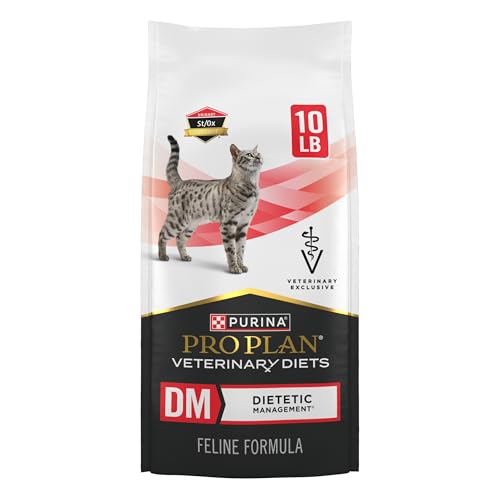
This Purina Pro Plan Veterinary Diets DM Dietetic Management Feline Formula Dry Cat Food is crafted to support low carbohydrate intake and high protein delivery, which can help maintain healthy glucose levels. The diet is designed to promote a urinary environment unfavorable to the development of crystals, addressing common feline urinary concerns. The emphasis on high protein supports lean body mass and helps the cat maintain an ideal body condition as dietary changes take effect and weight is managed under veterinary guidance.
With a focus on stable blood sugar, this dry formula aligns with diabetic management goals while providing urinary health benefits. The product is best used as part of a veterinarian‑directed diabetes care plan, particularly for cats needing steady glycemic control and weight maintenance. Consider this option when dry food fits your cat’s preferred texture and when the vet recommends a higher protein, lower carbohydrate approach.
Purina DM Dietetic Management Savory Selects Wet Cat Food

The Savory Selects Feline Formula Wet Cat Food from Purina DM Dietetic Management emphasizes high protein and lower carbohydrate content to support healthy glucose levels in cats. This wet option also contributes to a urinary environment that is unfavorable to crystal formation, consistent with Purina’s St/Ox Defense approach. The product’s protein level supports lean body mass, which can be important for diabetic cats undergoing weight management. Wet cat foods can aid hydration, an added consideration for urinary health and overall well-being in diabetic cats.
For cats that prefer or benefit from moisture in the diet, this option provides a palatable way to support glycemic control while maintaining muscle. It should be used under veterinary guidance, especially during transitions from other diets or when balancing with a dry DM formula as part of a comprehensive diabetes management plan.
Purina DM Dietetic Management Feline Wet Formula

This Purina Pro Plan Veterinary Diets DM Dietetic Management Feline Formula Wet Cat Food provides high protein and low carbohydrate content to help support healthy glucose levels in cats. The wet format offers moisture contribution for hydration and may aid in palatability for cats hesitant to eat dry diets. Like other DM products, it promotes a urinary environment unlikely to support crystal formation, aligning with long‑term kidney and urinary tract health goals. Use under veterinary supervision to ensure a balanced transition and alignment with overall diabetes management objectives.
Buying Guide
Choosing the right diabetic cat diet involves balancing glucose control, weight management, and overall health. Here are key considerations to guide your decision:
- Food form and palatability: Dry diets offer convenience and cost efficiency, while wet diets support hydration and may improve acceptance for picky eaters. Many cats benefit from a mix, but transitions should be gradual and vet‑supervised.
- Carbohydrate and protein balance: Diets designed for diabetes typically emphasize controlled carbohydrates and higher protein to support lean mass and glycemic stability. Compare labels for total carbohydrate content and crude protein to pick options aligned with your vet’s plan.
- Urinary health focus: Several DM formulas promote a urinary environment unfavorable to crystal formation. If your cat has a history of urinary issues, this can be a meaningful consideration in choosing and combining products.
- Vet oversight and prescription status: Veterinary diets labeled for diabetes are usually sold through veterinary channels or specific retailers with a veterinary directive. Work with your veterinarian to ensure the chosen diet fits the cat’s stage of diabetes and any concurrent conditions.
- Protein quality and animal‑based ingredients: Higher animal protein sources can support satiety and lean tissue, which may be beneficial for weight management in diabetics. Check ingredient lists for real meat as a primary protein source.
- Brand reliability and formulation goals: Hill’s and Purina Pro Plan DM lines focus on clinically designed nutrition for diabetic cats, with options that address digestion, urinary health, and weight control. Consider consistency of formulation and the availability of a veterinary plan.
- Transitional strategy: When switching diets, do so gradually (over 7–14 days) to minimize digestive upset and to allow the cat’s metabolism to adapt. Your veterinarian can tailor a transition plan based on current glucose control and weight trajectory.
- Monitoring and follow‑up: Regular veterinary checkups to monitor blood glucose, weight, and urinary health are essential. Diet changes should be paired with monitoring of response and adjustments as needed.
In sum, the best dietary path for a diabetic cat depends on individual health status, tolerances, and veterinary guidance. The five products reviewed here offer evidence‑based options that emphasize glycemic control, weight management, and urinary health, with both dry and wet formats to suit different cats and households. Always consult with a veterinarian to determine the most appropriate diet and transitioning plan for your pet’s unique needs.