Best Carpet Aquarium Plants for Freshwater Tanks
This guide highlights five top carpet-ready aquarium plants that help create lush foreground scenes in freshwater tanks. Each selection is chosen for its growth habit, ease of care, and suitability for American hobbyists with a range of tank sizes and lighting setups. The list includes a mix of traditional micro-turfers and compact foreground grasses, all suited to fill empty substrates with vibrant green. Use this as a starting point to design cohesive foreground carpets, whether you’re building a serene aquascape, a community tank, or a high-contrast iwagumi layout. The table below provides a quick snapshot of the picks.
| Product | Brand | Carpet Type |
|---|---|---|
| S.e.e.ds Carpet Plant Pack | Generic | Mixed Foreground Carpet |
| Dwarf Sag Carpet Plants (15-Pack) | Marcus Fish Tanks | Dwarf Sag Carpet |
| Monte Carlo Carpet Plant Pots (3-Pack) | Marcus Fish Tanks | Monte Carlo Carpet |
| Dwarf Baby Tears HC Cuba Tissue Culture | Ultum Nature Systems | HC Cuba Foreground |
| Dwarf Hairgrass Eleocharis Parvula | Generic | Hairgrass Carpet |
The following sections expand on each option, detailing why it belongs in a carpet-focused setup, how to plant and maintain it, and what to expect as it establishes itself in typical American home aquariums. Each product section includes practical considerations such as lighting, substrate, and potential weather-related shipping notes to help you plan effectively.
S.e.e.ds Carpet Plant Pack

The S.e.e.ds pack offers four live varieties designed to form a continuous foreground carpet across a wide substrate. The kit includes Tiny-leaf, Long Hair, Short Hair, and Big Dual Leaf types, distributed across four bags totaling roughly 1.4 ounces. The combination supports a dynamic textural mix: fine, mid, and broader leaves that create depth and movement in front of midground stems. Easy to grow compatibility makes this bundle suitable for beginners, while the diversity invites more advanced layouts as you experiment with spacing and layering. For best results, pair with a mild to moderate light setup and steady nutrient dosing to sustain carpet formation.
- Four distinct foreground varieties included
- Tiny-leaf, Long Hair, Short Hair, and Big Dual Leaf
- Designed for low to high lighting environments
- Instruction paper inside helps with initial setup
With moderate water flow and regular fertilization, these s.e.e.ds can begin carpeting within weeks, offering immediate visual impact while you refine placement and trimming strategies. They pair well with other foreground plants or mosses to increase texture and color diversity in the tank’s front zone.
Dwarf Sag Carpet Plants (15-Pack)

These Dwarf Sagittaria Subulata plants arrive as a substantial 15-pack designed to rapidly establish a vivid carpet in the foreground. Each plant typically reaches about 2-3 inches in height, delivering a uniform, low profile that visually expands the tank bottom. The density of 15 plants allows aquarists to cover larger substrate areas quickly, reducing bare patches and producing a natural transition into taller midground species. The plants are well suited to a range of substrate types and can tolerate moderate to bright lighting when nutrient levels are consistently maintained. This makes them ideal for beginners seeking an immediate carpet effect and intermediate hobbyists pursuing a dense layout.
- 15 live Dwarf Sag plants, 2–3 inches tall
- Forms dense foreground carpet
- Suitable for various substrates
- Moderate to bright lighting advised
Note: Extreme weather can impact live plants. The listing warns that temperatures can stress plants during cold shipments; winter deliveries should be planned with acclimation in mind. When properly acclimated, Subulata roots spread efficiently, enabling rapid filling-in of spaces while remaining compatible with typical community-tank inhabitants. Regular trimming keeps the carpet tight and encourages even growth across the foreground. Pair with complementary midground greens to frame the carpet and create a cohesive aquascape.
Monte Carlo Carpet Plant Pots (3-Pack)

Monte Carlo carpeting is a popular choice for creating vibrant, low-lying foreground coverage, and this three-pot pack makes it easy to start or expand a carpet from multiple anchors. Each pot contains Micranthemum Monte Carlo in compact 2-inch pots, which simplifies placement in tightly designed aquascapes. Monte Carlo often fills in quickly via runners, delivering dense, rounded edges that look natural and lush in front of taller stems. It responds best to moderate to high lighting and consistent fertilization, with CO2 enhancing short-term growth. Expect slight variation in leaf shape and growth speed between pots, which can add a varied, organic feel to the carpet.
- Three Micranthemum Monte Carlo pots (2-inch)
- Forms a dense, low carpet through runners
- Best under moderate to high light; nutrient-rich regime recommended
- Gardens well with mosses and other foreground plants
The 2-inch pot size enables precise layout planning, especially in mid-sized tanks or as a defined front-edge feature in larger aquascapes. While generally forgiving, Monte Carlo benefits from gradual acclimation to changes in lighting and nutrients. Regular pruning helps maintain a compact appearance and ensures even carpet development across the substrate. This pack provides flexibility for creative foreground designs and is suitable for aquascapes ranging from natural to geometric styles.
Dwarf Baby Tears HC Cuba Tissue Culture

Dwarf Baby Tears, Hemianthus Callitrichoides Cuba, is a tiny but impactful foreground plant prized for creating the classic lush carpet seen in many aquascapes. This tissue-culture line emphasizes clean, snail-free stock with a dense, compact growth habit that forms intricate green blankets. HC Cuba can grow submerged or emersed in dry-start setups, Wabi Kusa, and Iwagumi layouts, making it a versatile choice for experimentation. It requires medium-to-high lighting, a steady nutrient schedule, and often supplemental CO2 for best results. Given its small roots, careful planting and stable conditions help prevent initial planting failure.
- One of the smallest foreground plants
- Submersed or emersed growth possible
- Requires medium-high light and nutrients
- Spacing and initial planting awareness help establishment
HC Cuba delivers dramatic foreground density when conditions are optimized. Start with a reliable lighting plan and a consistent fertilization routine, then monitor for algae pressure and adjust CO2 as needed. Pair HC Cuba with taller mid-ground species to create depth and contrast, and consider moss accents for textural variety. While demanding in setup, the resulting carpet often becomes a focal point in aquascapes, drawing the eye toward the tank’s foreground and creating a sense of miniature landscape drama.
Dwarf Hairgrass Eleocharis Parvula Tissue Culture
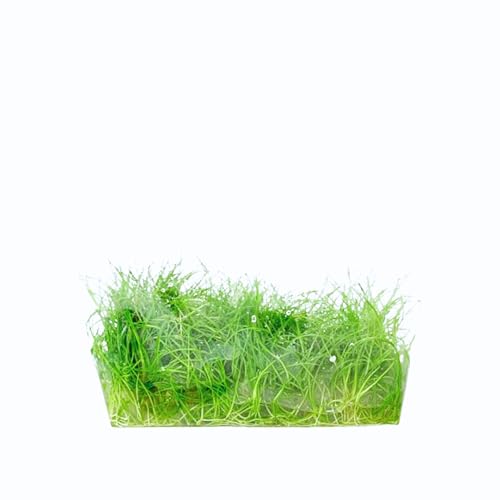
Dwarf Hairgrass, Eleocharis Parvula, is a versatile foreground carpet plant often cultivated through tissue culture for safe, pest-free introduction. Vitro-grown stock minimizes the risk of pests, algae, and bacterial contamination, which is especially valuable for community tanks. The plant is grown in a nutrient-rich gel medium that accelerates early growth, helping form a soft, grass-like carpet once established. It is ideal for defining the foreground and providing a gentle substrate contrast against hardscape elements. Hairgrass pairs well with mosses, rocks, driftwood, and other foreground plantings to create a natural meadow look.
- Vitro-grown, pest-free stock
- Nutrient-rich growth medium supports early vigor
- Excellent for foreground plantings in varied tank sizes
- Pairs well with mosses and hardscape for texture
Maintenance focuses on adequate light and steady nutrients to sustain a dense carpet. Hairgrass tends to respond well to regular trimming to keep a uniform, low profile. In larger tanks, you can stagger plantings to create a gradual transition from foreground to midground, while in smaller tanks a single, dense swath can serve as a focal carpet that highlights rocks or wood features. This species offers a refined, grassy aesthetic that remains popular among planted-tank enthusiasts in the United States.
Buying Guide
Lighting, CO2, and nutrients
Carpet plants generally demand bright, consistent lighting to achieve dense growth and full carpet coverage. Moderate to high light helps several compact foreground species spread quickly, while CO2 supplementation can accelerate the maturation of tougher varieties like HC Cuba. If CO2 is unavailable, focus on steady nutrient dosing and regular water changes to support plant health. Plan layouts that consider light distribution across the substrate, avoiding overly shaded pockets that stall growth.
Tank size, substrate, and placement
Low-growing foreground plants adapt to a wide range of tank sizes, but the scale of the carpet should harmonize with the aquarium’s dimensions. Substrate choice matters—nutrient-rich soils can speed carpet formation, whereas sand and inert substrates may require root-enhancing fertilizers. Place carpeting plants along the front edge and gradually fill toward the center, leaving space for taller midground specimens. For dense carpets, stagger plantings to encourage even distribution and minimize gaps that algae can colonize.
Growth rates and maintenance
Carpet plants vary in growth speed. Monte Carlo and Dwarf Sag often establish quickly under good lighting, while HC Cuba and Dwarf Hairgrass may take longer to fill in. Regular pruning is essential to maintain a neat carpet and prevent leggy growth. Grooming schedules can range from weekly to biweekly during active growth, and less frequent maintenance is needed once the carpet becomes established. Expect steady, ongoing care rather than a hands-off approach in the early stages.
Species compatibility and tank inhabitants
Foreground plants should tolerate the same water conditions as the tank’s fish and invertebrates. In community tanks, quick-growing carpets can outcompete nuisance algae by shading surfaces near the substrate. Consider pairing carpets with gentle current and stable temperatures suitable for your livestock. Some species may be sensitive to drastic temperature changes during shipping, so plan deliveries with seasonal climate conditions in mind and acclimate the plants gradually to prevent shock.
Shipping, climate, and care tips
Live aquatic plants shipped to home aquariums can be affected by temperature and transit time. If you live in regions with extreme temperatures, consider scheduling deliveries during milder periods or selecting expedited shipping if available. Upon arrival, inspect plants for freshness, trim any damaged tissue, and acclimate slowly to aquarium water. Introduce plants after a stable lighting schedule is established, and monitor for initial algae growth as the carpet begins to form. With patience and consistent care, carpet plants deliver lasting visual impact and a natural aquarium microcosm.