Best Allergy Test for Dogs: A Practical Guide to Pet Sensitivity Insights
Pet owners increasingly seek reliable at‑home options to identify food and environmental triggers affecting dogs. This guide reviews five top at‑home allergy and intolerance tests, focusing on breadth of coverage, ease of use, and practical results you can apply to your dog’s diet and living environment. Each product uses fur or hair samples to screen against hundreds of ingredients and common environmental factors, helping you tailor elimination strategies with confidence.
| Product | Coverage | Sample Type | Result Time |
|---|---|---|---|
| 5Strands Pet Food Intolerance & Environmental Sensitivity Test | 855+ items | Fur | 4 days |
| 5Strands Pet Food Intolerance Test | 575 items | Fur | 4 days |
| Better Life Science Pet Food & Environmental Sensitivity Hair Sample Testing Kit | 460+ items | Hair | Unspecified |
| Glacier Peak Holistics The Original Pet Intolerance Test | 395+ items | Hair & saliva | 7‑10 business days |
| 5Strands Pet Raw Food Intolerance Test | 410 items | Fur | 4 days |
The tests vary in the number of ingredients screened and the inclusion of environmental triggers. They are designed for home use and aim to reduce vet visits by offering actionable dietary and living‑environment recommendations based on test results.
5Strands Pet Food Intolerance & Environmental Sensitivity Test
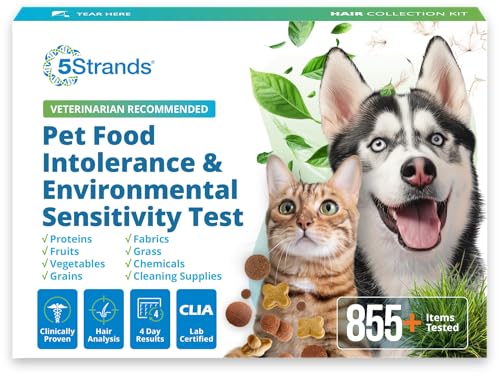
The 5Strands at‑home test covers 855+ food intolerances and environmental sensitivities, including 575 food ingredients and 282 environmental items. It is designed to reveal links between gut health, symptom patterns like diarrhea or skin irritations, and potential triggers in both diet and surroundings. The process involves collecting 10–15 strands of fur, mailing to a certified lab, and receiving results in about four days via email or a mobile app. Ideal for multi‑factor insights, it helps owners tailor elimination strategies with greater confidence.
5Strands Pet Food Intolerance Test

This 575‑item test focuses on dietary sources, spanning 14 categories such as proteins, grains, dairy, fats, and additives. It helps identify foods that may trigger diarrhea, paw biting, itching, or scratching. By mailing in 10–15 strands of fur, pet owners receive easy‑to‑interpret results within four days, enabling targeted dietary changes rather than trial‑and‑error approaches.
Better Life Science Pet Food & Environmental Sensitivity Hair Sample Testing Kit

Better Life Science offers broad screening—over 460 potential food and environmental triggers—via a simple at‑home hair sample. The kit emphasizes non‑invasive collection and an informational report that groups items by reactivity level, helping owners see which foods or environmental factors may require attention. Results are designed to be read and understood without medical training, supporting practical dietary and lifestyle adjustments.
Glacier Peak Holistics The Original Pet Intolerance Test
Glacier Peak Holistics screens 395+ food and environmental stressors using a hair and saliva kit. It offers quick, convenient sample collection with a prepaid return envelope (US only) and aims to identify triggers for a range of issues, including itching and digestive concerns. The test is positioned as a comprehensive starter for pet owners seeking to pinpoint non‑medical sensitivities without heavy vet involvement.
5Strands Pet Raw Food Intolerance Test
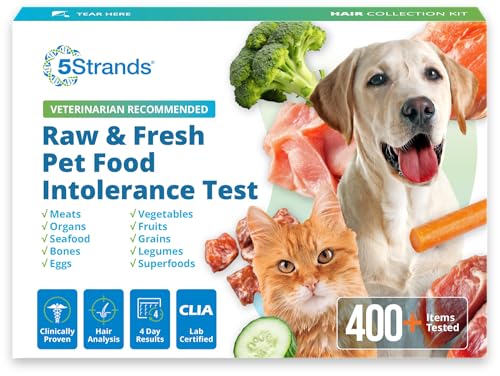
This test specializes in raw, fresh, and gently cooked food intolerances, covering 410 items across raw ingredients used in BARF, prey models, and RMBDs. It helps identify gut intolerance patterns to raw diets, which can present with diarrhea, gas, fur loss, or hot spots. The at‑home process mirrors the others: collect fur, mail to a certified lab, and receive results within four days, with optional mobile app access for results review.
UCARI Pet Sensitivity Test

UCARI uses a bioresonance approach to screen 350+ intolerances, focusing on foods and ingredients that may cause digestives issues, itchy skin, hot spots, hair loss, and paw licking. The four-step process is straightforward: register, collect a hair sample, mail to a USA lab, and receive results within 48 hours. While marketed as comprehensive, the test emphasizes ease and speed of results to support timely dietary and lifestyle decisions for pet owners.
Buying Guide: Key Considerations For Choosing A Dog Allergy Test
When selecting an at‑home allergy or intolerance test for dogs, consider the following perspectives to ensure you choose a method that fits your needs and informs practical steps.
- Breadth of coverage: More items mean broader screening of potential triggers, but evaluate whether the test includes both dietary components and common environmental factors relevant to your dog’s living conditions.
- Sample type and handling: Most tests use fur or hair samples. Confirm collection steps are easy and non‑invasive for your pet, and check whether the kit provides prepaid return shipping.
- Result clarity: Look for reports that categorize items by reactivity, include simple explanations, and offer actionable next steps such as suggested eliminations or environmental adjustments.
- Turnaround time: Four days is typical for many services, but some offer longer timelines. If you need rapid guidance for ongoing symptoms, prioritize faster options.
- Clinical relevance: These tests are informational and not medical diagnoses. Use results to guide discussions with a veterinarian, especially if your dog has persistent or severe symptoms.
- Dietary implications: If raw or specially prepared diets are involved, assess whether the test covers those ingredients and how to interpret findings in the context of your dog’s overall nutrition.
- Data access: Some providers pair results with apps or online portals. Consider whether mobile access improves your ability to track symptoms alongside test outcomes.
- Reproducibility and lab standards: Reputable brands work with certified labs and provide clear instructions to minimize sample contamination or misinterpretation of results.
- Cost and value: Weigh the number of items tested against the actionable insights provided. A broader panel may offer more ideas but not always more practical guidance for your dog’s specific symptoms.
- Follow‑up options: Explore whether the brand offers guidance on elimination diets or next steps after receiving results, including vet support or additional testing if needed.
Choosing the right test involves balancing coverage, ease, and how you plan to use the results. For some dogs, a broader panel paired with a careful elimination strategy can yield meaningful improvements in skin, digestion, and comfort, while others may benefit from a more targeted approach focusing on known symptom patterns.